
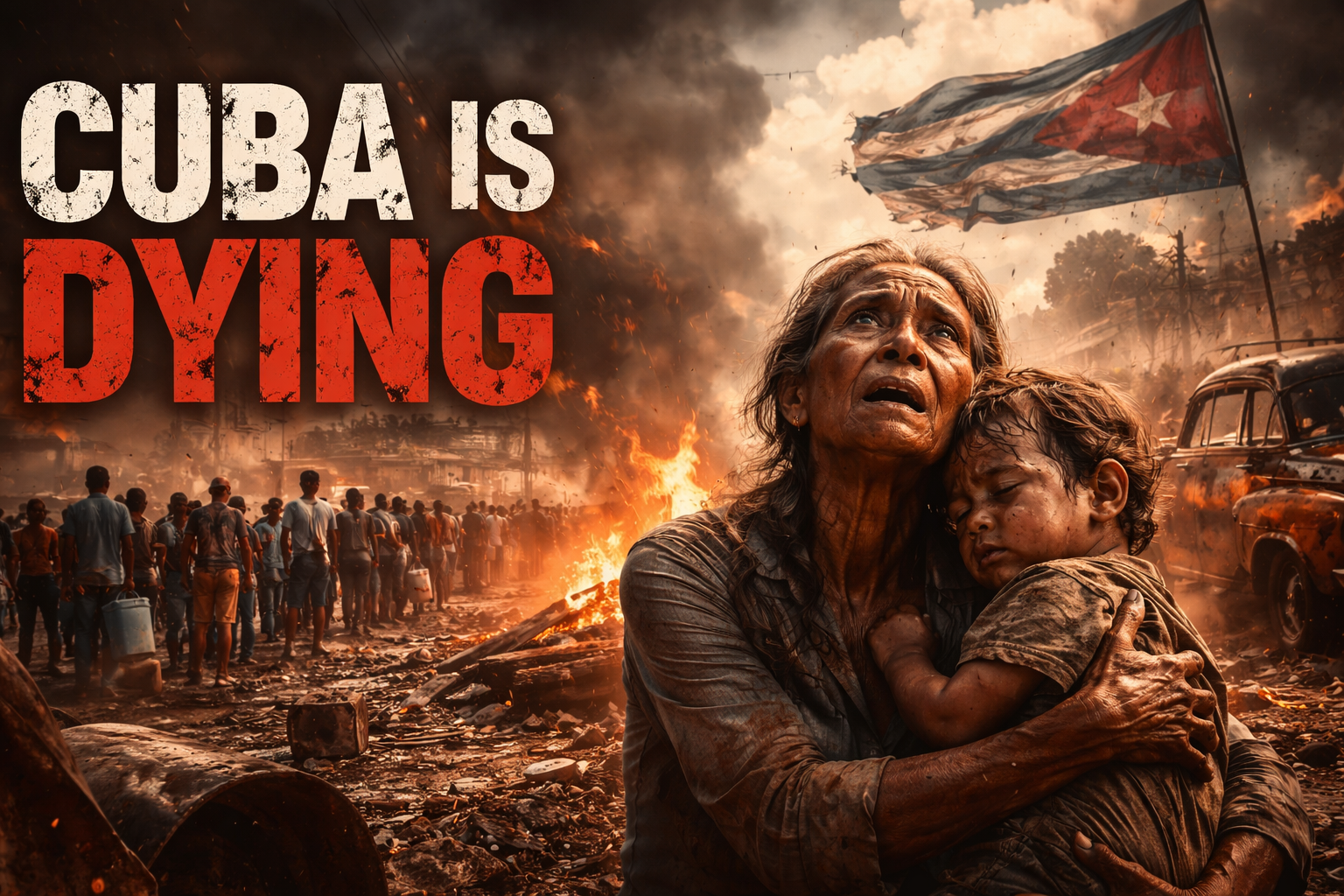
There’s grief that aches quietly in private letters, and there’s outrage that should be shouted from rooftops. What I’m about to write belongs to both.
Right now in Cuba, a humanitarian crisis is unfolding that too few people outside the island understand — and even fewer are willing to confront with eyes wide open. What was already a brittle economy has snapped under new pressures this year, and real people with families, hopes, and dreams are paying the price.
A Country Cut Off at the Source
For decades, Cuba imported most of its fuel — essential not just for cars and trucks, but for food production, hospital generators, power plants and the very backbone of daily life. That lifeline came first from Venezuela’s oil industry; then, more recently, from Mexico. But political and economic pressure from the U.S. has effectively choked those supplies. Cuba has gone weeks without substantial imported fuel, causing prolonged blackouts, food distribution breakdowns and stalled transportation systems.
This isn’t conjecture — it’s happening in real time. People in Havana and across the island queue for what little petrol dribbles in. Electricity flickers in and out. Blackouts stretch longer each week. Food and medicine stocks shrink faster than balloon animals at a children’s party.
Human Cost Beyond the Headlines
Look beyond the policy wrangling and geopolitical posturing. Behind every line of newsprint, there are children who go to bed hungry, farmers who can’t irrigate their fields, parents who wait in vain for a bus that never arrives. Electricity is no longer a given — it’s rationed. Emergency services slow to a crawl because there’s no fuel to move ambulances or fire trucks.
My hands ache with impotence because my government — like many others — moves at the pace of bureaucracy. While the world dithers over threats, tariffs, and talking points, ordinary people are suffering. While leaders dine and sleep with lights on, millions struggle simply to power a refrigerator or prepare a meal. This isn’t abstract policy — it’s flesh and bone. This is what happens when geopolitics tramples humanity.
Aid Doesn’t Undo Starvation
The United States has announced additional humanitarian aid — millions of dollars directed through NGOs like the Catholic Church. But soup kitchens and canned food are not an antidote to systemic starvation. They are droplets in a desert. Meanwhile, the same policies that cut off fuel supplies — and precipitated this crisis — remain in force.
This contradiction is the bitterest of all: aid parcels cannot run trucks without petrol, restock pharmacies without electricity, or deliver food without fuel.
Why We Must Care — Even From Afar
You might not have loved ones in Cuba. Most people don’t. But what’s happening there is a bellwether — a stark example of how policy choices made in distant capitals can ripple across nations and break lives.
We’ve seen this before in global crises — sanctions meant to punish governments often hurt people. Cuba’s troubles have been building for years: economic contraction, food shortages, inflation, and rolling blackouts long before the present moment. The pandemic, the loss of subsidised Venezuelan fuel, and longstanding embargoes deepened the wounds.
Now add a near-total fuel cutoff and you get not just inconvenience, but systemic collapse.
A Plea for Awareness and Action
So here is my plea — not as a politician, not as a pundit, but as a human with a heart in two places at once:
- Understand what is at stake: This isn’t just economy or ideology — it’s survival.
- Ask your leaders for compassionate policy: Real humanitarian space, real food and fuel relief corridors, not just canned aid.
- Help raise awareness: Share the human stories behind the headlines. Let’s not let this crisis fade quietly into statistics.
Too many people think that being informed and doing nothing is enough. It isn’t. We owe ourselves — and the people suffering — more than passive sorrow. We owe action, awareness, and persistence.